Streamline construction task management for smoother site delivery
Discover how to eliminate project overruns and improve site delivery through structured task management and digital workflows aligned with UK CDM 2015 regulations.
By James Shorter ·
Streamline construction task management for smoother site delivery
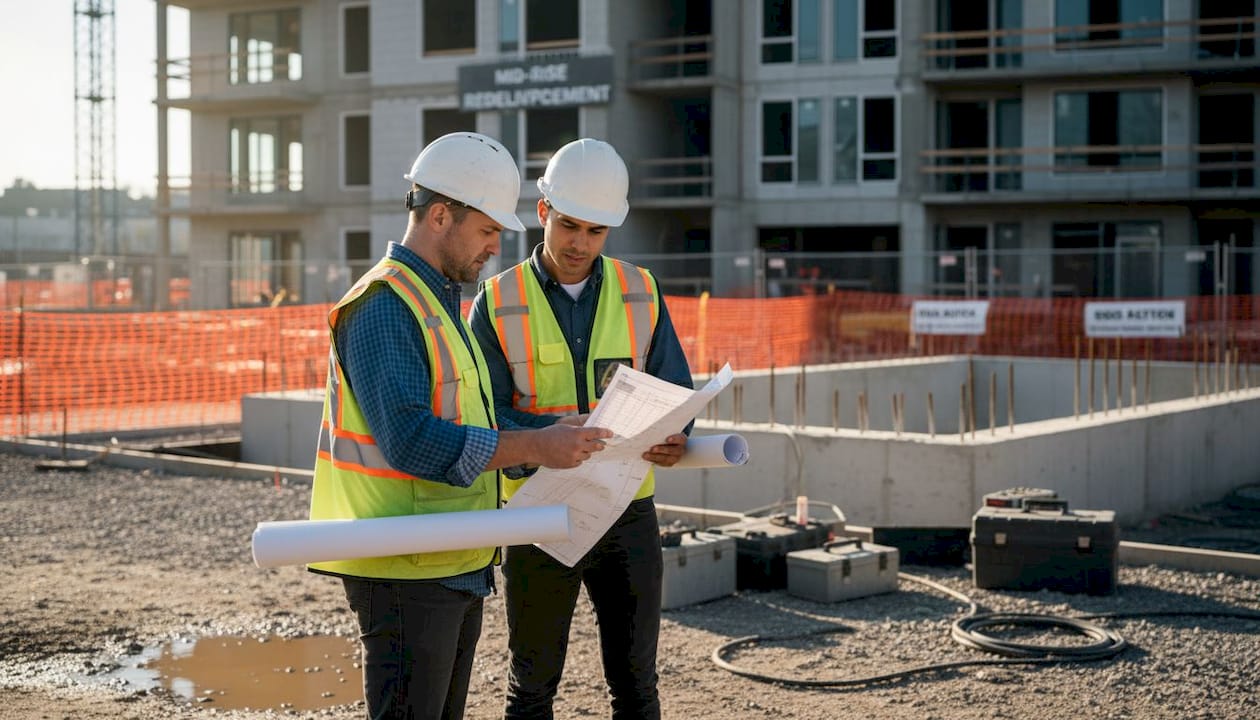 A purpose-built construction snagging software keeps these items tracked through to sign-off.
UK construction projects regularly overrun by more than six months, and poor task management is almost always at the root of it. Picture a site manager juggling subcontractor schedules on a spreadsheet, chasing RAMS sign-offs by text, and fielding client calls about progress nobody has documented. The result is wasted labour, spiralling costs, and a handover that nobody is proud of. This guide walks you through every stage of the construction task management process, from pre-construction planning to site handover, so your team delivers on time, on budget, and in full compliance with UK law.
Table of Contents
- Core components of the construction task management process
- Tools and resources you need before starting
- Step-by-step construction task management process: From planning to site handover
- Common pitfalls and troubleshooting: What goes wrong and how to fix it
- Integrating advanced digital approaches for 2026 and beyond
- Transform your construction task management with smarter solutions
- Frequently asked questions
Key Takeaways
| Point | Details |
|---|---|
| Compliance first | Build every process on CDM 2015 and quality assurance for legal and project success. |
| Embrace digital tools | Switching to digital platforms dramatically saves time and reduces costly errors. |
| Reliable communication | Real-time updates and version control prevent confusion and keep all stakeholders aligned. |
| Plan for pitfalls | Prepare for changing site conditions by routinely updating RAMS and checking supply chain health. |
| Future-proof with AI | Integrate automation and AI to stay competitive and resilient as the industry evolves. |
Core components of the construction task management process
Before you can manage tasks effectively, you need to understand what the process actually involves. In the UK, CDM 2015 Regulations set the legal framework for how construction work must be planned, managed, and monitored. Every notifiable project requires a Construction Phase Plan (CPP), which documents how health, safety, and welfare will be managed throughout the build.
Alongside the CPP, you will work with a Work Breakdown Structure (WBS), which splits the entire project into smaller, manageable tasks. Method statements and Risk Assessments and Method Statements (RAMS) sit alongside the WBS, detailing exactly how each task will be carried out safely. Together, these documents form the backbone of your task management system.
The process itself runs across three broad phases:
- Pre-construction: Site surveys, design coordination, procurement, CPP drafting, and stakeholder briefings.
- Execution: Daily task allocation, progress tracking, quality inspections, and subcontractor coordination.
- Post-construction: snagging, commissioning, documentation handover, and lessons-learned reviews.
Programme timelines, whether Gantt charts or 4D BIM models, give every team member a visual map of dependencies and deadlines. Risk registers and stakeholder communication logs keep everyone accountable. You can explore how digital vs paper task workflows compare in practice to decide which approach suits your site.
“A proportionate, structured approach to task management is not just best practice on multi-employer sites, it is a legal requirement under CDM 2015. The principal contractor is responsible for coordinating all work activities and ensuring every trade has the information they need.”
| Phase | Key documents | Primary responsibility |
|---|---|---|
| Pre-construction | CPP, WBS, RAMS, procurement schedule | Principal designer, PM |
| Execution | Daily task logs, inspection records, RFIs | Site manager, trades |
| Post-construction | Snagging list, O&M manuals, handover pack | PM, client |
Tools and resources you need before starting
Assembling the right toolkit before work starts is the difference between a project that flows and one that constantly stalls. At minimum, you need a programme tool (Gantt or BIM), a digital checklist system, a document management platform, and a communication channel that creates an audit trail.
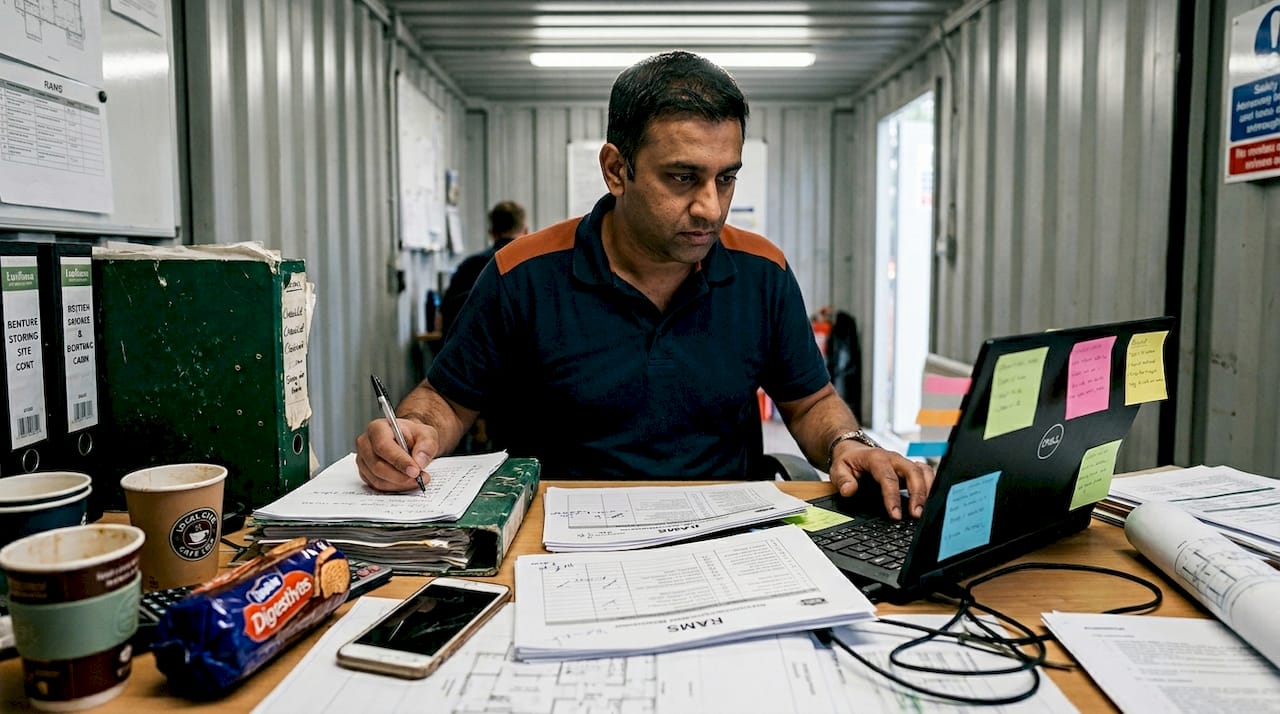
Paper-based and spreadsheet systems are still common on smaller UK sites, but they carry real risks. Version control failures, illegible handwriting, and lost sign-off sheets are all too familiar. Digital tools like Procore have been shown to reduce admin by up to 90%, with schedules verified in minutes rather than hours. The cost impacts of tool selection are significant, so it pays to choose carefully from the outset.
| Approach | Pros | Cons |
|---|---|---|
| Paper and spreadsheets | Low upfront cost, familiar to all | No audit trail, version control issues, slow updates |
| Dedicated digital platform | Real-time updates, mobile access, automated scheduling | Requires onboarding, subscription cost |
| Hybrid (paper plus basic apps) | Flexible, low resistance from trades | Fragmented data, duplication of effort |
For UK compliance, your digital toolkit should include:
- CPP and RAMS templates aligned to CDM 2015 requirements.
- A work breakdown structure tool for task decomposition.
- Mobile-accessible checklists for daily inspections and quality sign-offs.
- A document register with version control and access permissions.
- An automated scheduling tool that flags clashes and resource conflicts.
Pro Tip: Before committing to any platform, run a two-week pilot on a live project. Measure how long it takes to update a task, share a document, and get a sign-off. If it takes longer than your current method, the tool is not right for your team. The workflow digitalisation case shows how the right choice can cut rework by over half.
Step-by-step construction task management process: From planning to site handover
With your tools in place, here is how to run the full process from start to finish.
- Pre-construction planning. Define project scope, produce the WBS, and draft the CPP. Assign a principal contractor and confirm all site admin essentials are in place before any work begins.
- Task breakdown and sequencing. Break each WBS element into individual tasks with clear owners, durations, and dependencies. Use a Gantt chart or 4D BIM to visualise the critical path.
- Resource allocation. Match labour, plant, and materials to each task. Flag conflicts early using your scheduling tool. This is where saving money on site starts, because idle resources are expensive resources.
- Execution and daily management. Issue task instructions each morning, capture progress against the programme, and log any variations. Hold short daily stand-ups to surface blockers before they become delays.
- Reporting and quality assurance. Run weekly progress reports against the baseline programme. Conduct quality inspections at defined hold points and record outcomes digitally.
- Handover. Compile the health and safety file, O&M manuals, test certificates, and snagging sign-offs. A clean digital handover pack reduces post-completion disputes significantly.
The numbers back this up. Digital adoption on site has delivered four-week schedule accelerations, 20% resource savings, and cost savings exceeding £40,000 on individual projects. Those are not marginal gains.
Pro Tip: Whenever a task changes mid-project, whether due to a design revision, a material substitution, or a scope addition, re-check the associated RAMS before work restarts. A revised task with an unchanged method statement is a compliance gap waiting to become an incident. Use your site manager communication guide to build this check into your standard change process.
Common pitfalls and troubleshooting: What goes wrong and how to fix it
Even well-planned projects hit problems. Knowing what to look for means you can fix issues before they cascade.
The most common failures on UK construction sites include:
- Siloed updates: One trade updates their task log, but nobody else knows. Fix this by using a single platform where all updates are visible to the whole team in real time.
- Out-of-date RAMS: Multi-contractor sites require the principal contractor to ensure every subcontractor is working from the current version of every document. A central document register with mandatory sign-off on new versions is non-negotiable.
- Supply chain holdups: Materials arriving late knock on to every subsequent task. Build float into your programme for long-lead items and set up automated alerts when delivery dates slip.
- Poor version control: Outdated drawings on site cause rework. Enforce a version control and admin process where superseded documents are immediately archived and replaced.
- Communication breakdowns: Verbal instructions with no written record are a liability. Every significant instruction should generate a written record, even if it is just a quick message in a shared project channel.
Fixing communication errors is often the fastest way to recover a struggling project. And sharing information effectively can cut construction errors by up to 70%.
“On dynamic sites with multiple employers, the principal contractor must maintain a live, proportionate approach to task management. Static plans and infrequent reviews are not enough when trades are overlapping and risks are changing daily.”
Integrating advanced digital approaches for 2026 and beyond
The UK construction industry is at a turning point. Digital adoption is accelerating, but many firms still operate with siloed tools that do not talk to each other. AI and automation are genuinely promising, but their value depends on integration. A standalone AI tool that does not connect to your programme, your document register, and your communication platform adds complexity rather than reducing it.
The practical steps for integrating advanced digital tools are straightforward:
- Start with a pilot project. Choose a mid-complexity project and test your chosen platform end-to-end before rolling out across the business.
- Train your team properly. Resistance to new tools is almost always a training problem, not a technology problem. Invest in short, practical sessions on site.
- Build smarter audit trails. Use automation to capture task completions, inspection outcomes, and document sign-offs without manual data entry.
- Connect your tools. Ensure your scheduling, document management, and communication platforms share data. Siloed systems recreate the same fragmentation you are trying to solve.
- Review and iterate. Set a quarterly review to assess what the data is telling you about productivity, rework rates, and programme performance.
The evidence from AI adoption research confirms that integration is the critical factor. Firms that connect their digital tools see compounding gains; those that bolt on individual apps see limited returns.
| Approach | Schedule performance | Rework rate | Admin burden |
|---|---|---|---|
| Traditional (paper/spreadsheet) | Frequent overruns | High | Very high |
| Partial digital (mixed tools) | Moderate improvement | Reduced | Moderate |
| Fully integrated digital/AI | Consistent on-time delivery | Low | Minimal |
Addressing digital collaboration challenges early in your adoption journey prevents the most common failure modes and sets your team up for long-term gains.
Transform your construction task management with smarter solutions
Everything covered in this guide, from CDM compliance and RAMS management to real-time task tracking and digital handover, is achievable with the right platform behind you. The challenge is finding one built specifically for construction, not adapted from a generic project management tool.
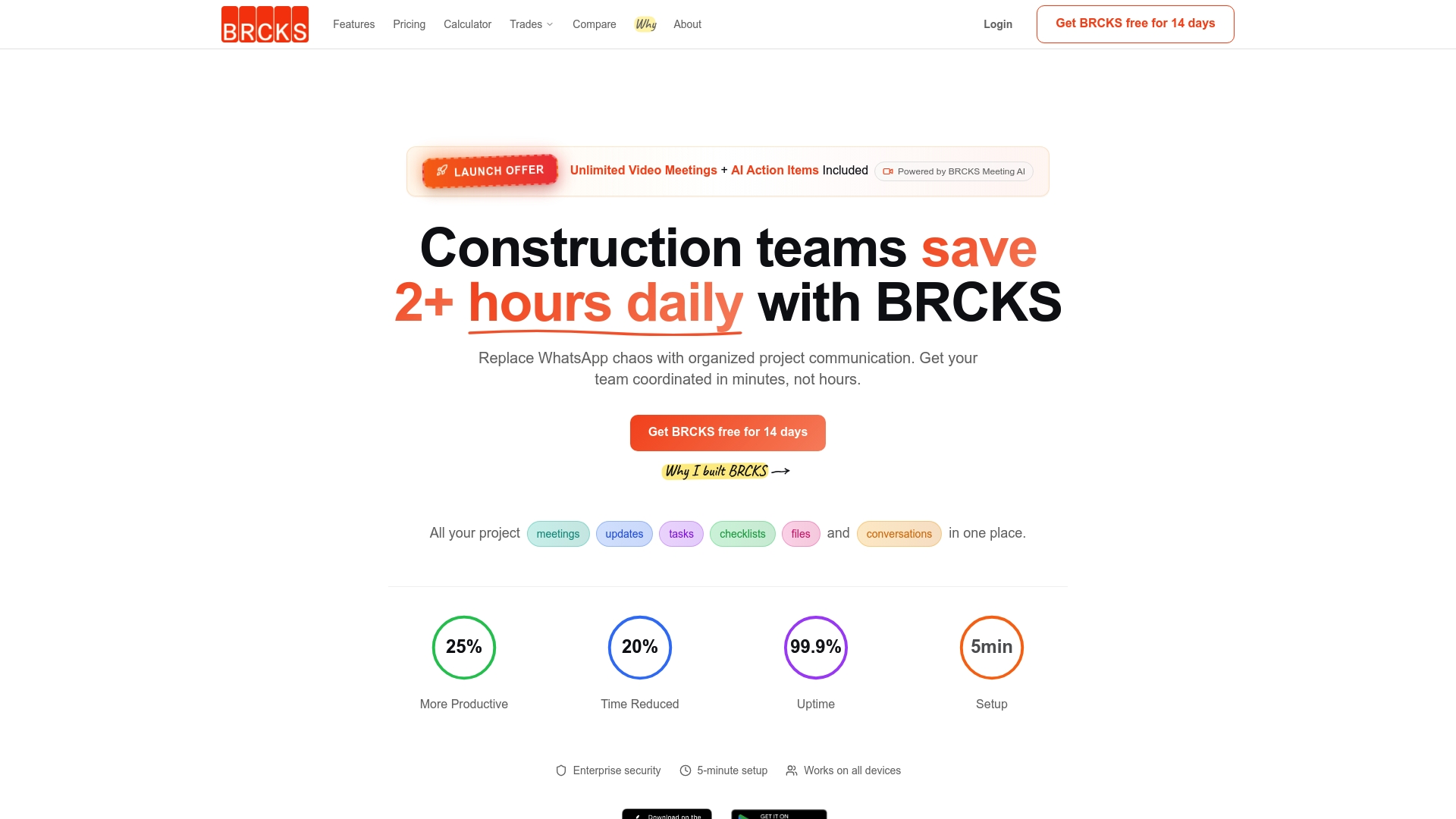
BRCKS is built for exactly this. Whether you are a builder managing multiple trades, a project manager coordinating subcontractors, or a team leader trying to cut through communication chaos, BRCKS brings tasks, checklists, file sharing, and team chat into one place. It saves teams over two hours daily through automation and integrates with WhatsApp so your trades do not need to learn a new system from scratch. If you have been relying on spreadsheets and group chats, see why BRCKS outperforms those approaches and what makes it the right choice for UK construction teams in 2026.
Frequently asked questions
What regulations must be followed for task management in UK construction?
You must follow the CDM 2015 Regulations, which specify requirements for Construction Phase Plans, method statements, and RAMS on all notifiable projects.
What is the biggest benefit of using digital tools for construction task management?
Digital tools cut admin by up to 90% and allow schedule verification in minutes rather than hours, freeing your team to focus on delivery rather than paperwork.
How do I avoid overruns and costly rework?
Use digital task management with real-time updates and automate routine checks. Digital adoption reduces rework and can accelerate project schedules by four weeks or more.
What if my site changes rapidly or tasks require RAMS updates?
Update RAMS immediately whenever tasks or risks change, and distribute the latest version through a central digital platform so every operative is working from current information.
Recommended
- BRCKS | Construction Project Communication Software
- Construction Software for Builders | BRCKS
- BRCKS | Construction Project Communication Software
- BRCKS | Construction Project Communication Software
How BRCKS Can Help
Effective task management is the cornerstone of any successful build, ensuring that every trade remains aligned and deadlines are consistently met. By integrating these streamlined processes into your daily workflow, BRCKS provides the real-time visibility and coordination needed to prevent costly delays on site. Our platform simplifies complex logistics into manageable actions, allowing your team to focus on quality delivery rather than administrative hurdles. We invite you to discover how BRCKS can transform your project efficiency by exploring our features today. Learn more at BRCKS.