Document control in construction: streamline projects with confidence
Poor document control costs the UK construction sector £21bn annually. Discover how to implement robust version control and digital processes to eliminate costly site errors.
By James Shorter ·
Document control in construction: streamline projects with confidence
TL;DR:
- Poor document control causes delays, rework, and legal risks in UK construction projects.
- Effective management includes clear processes, version control, and specialised software tools.
- Success depends on fostering a shared culture of information sharing and accountability among teams.
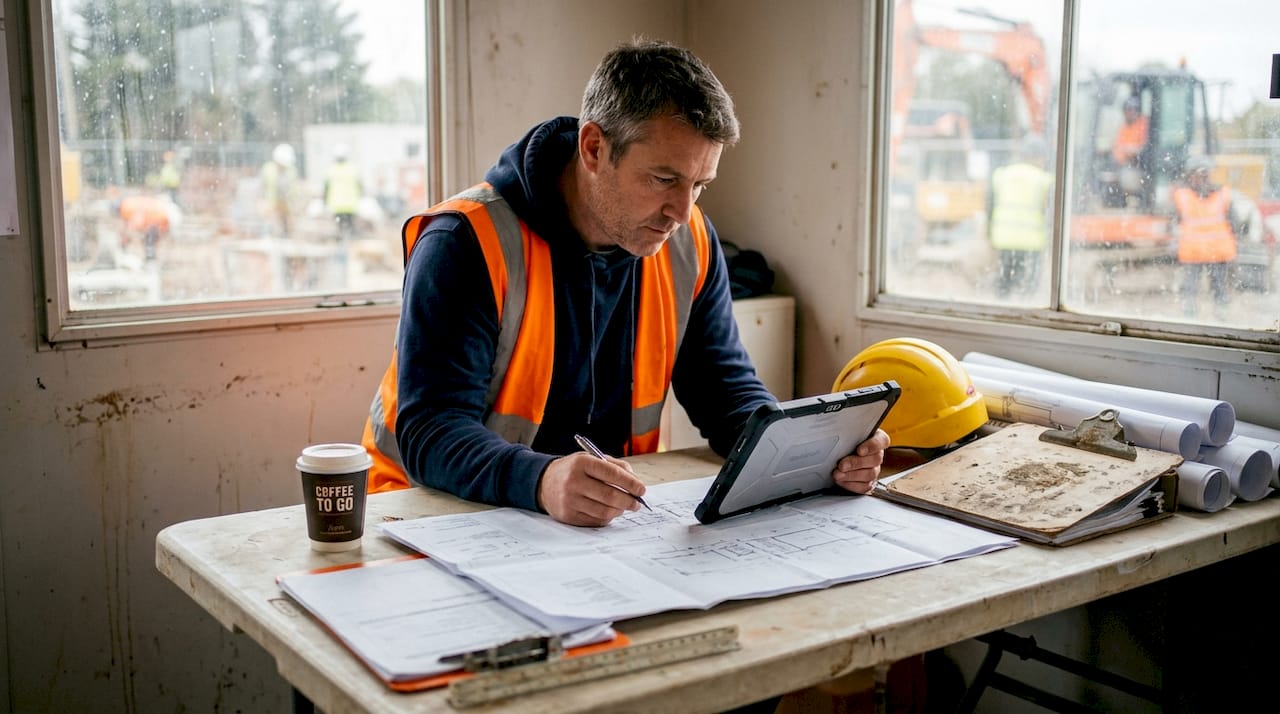
Imagine a subcontractor on site pouring a foundation slab using a drawing that was superseded three weeks ago. Nobody flagged the update. The error costs tens of thousands of pounds and weeks of delay. This scenario plays out across UK construction every day, and it is almost always preventable. Document mismanagement costs over £21bn annually in the UK construction sector alone. For project managers and site supervisors, getting document control right is not a back-office concern. It is a frontline priority that directly shapes project outcomes, team accountability, and client trust.
Table of Contents
- Defining document control in construction
- Why document control matters: Risks and rewards
- Core components and key processes
- Choosing the right tools for document control
- Why document control is more human than technical
- Discover stress-free document control for your team
- Frequently asked questions
Key Takeaways
| Point | Details |
|---|---|
| Definition made simple | Document control is about making sure the newest, correct documents are used and shared throughout your project team. |
| Why it matters | Getting document control right reduces rework, legal risk, and costly mistakes. |
| Process essentials | Adopt clear processes like version control, controlled access, and regular updates for all documents. |
| Choose effective tools | Use modern, digital document systems for transparency, speed, and security. |
| Culture is key | No platform can fix bad habits—commit to a culture of clarity and communication for lasting improvement. |
Defining document control in construction
With the stakes set, it is crucial to understand what document control actually is and what it is not. According to industry definitions of document control, the term refers to the systematic management of documents throughout a project’s life, covering creation, review, approval, distribution, and archiving. It is not simply storing files in a shared folder. It is a structured discipline that ensures the right people have access to the right version of every document at the right time.
In construction, the scope of document control is broad. It covers:
- Drawings and design revisions at every stage of the build
- Contracts and subcontractor agreements with all amendments tracked
- Permits, licences, and regulatory approvals required on site
- Requests for Information (RFIs) and their formal responses
- Specifications, method statements, and risk assessments
- Meeting minutes, site diaries, and inspection records
Each of these document types carries risk if it is lost, outdated, or inaccessible. A site operative working from a superseded drawing is not being careless. They are a victim of a broken system. The same is true when a project manager cannot locate the signed variation order during a dispute, or when a subcontractor receives conflicting specifications from two different team members.
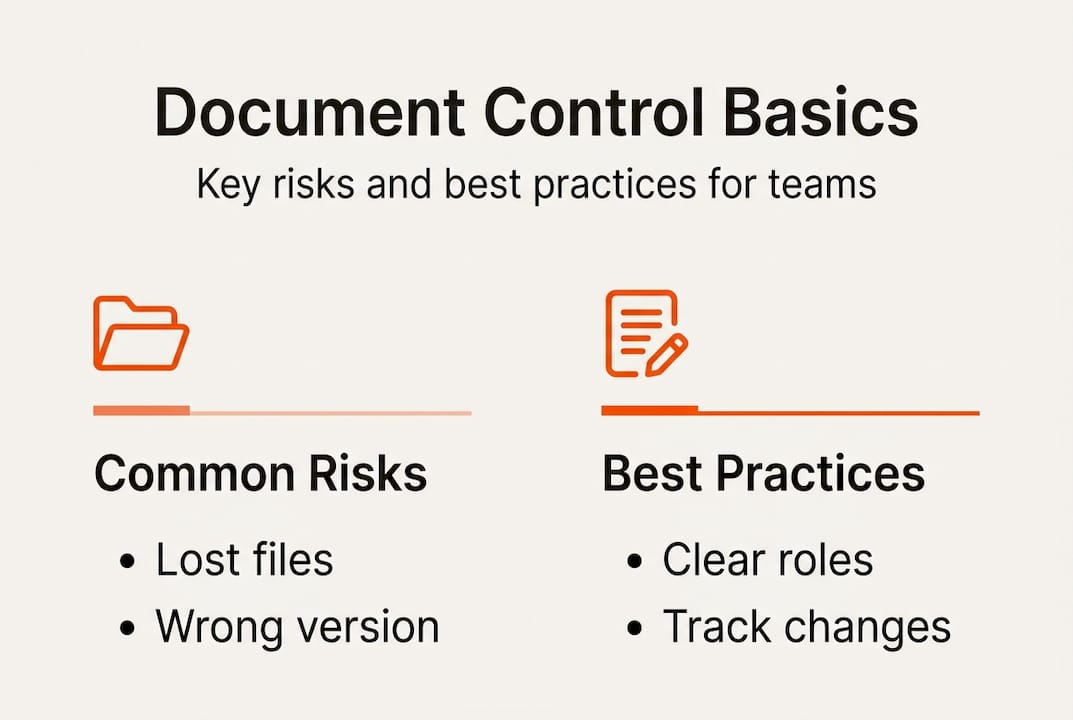
Common struggles in construction document control include lost files buried in email threads, multiple versions of the same drawing circulating simultaneously, and unclear ownership of who is responsible for issuing or updating a given document. These are not small inconveniences. They are the root causes of rework, disputes, and delays that erode margins and damage client relationships.
Effective document control addresses all of this by establishing clear processes: who creates documents, who reviews and approves them, how they are distributed, and how older versions are retired. It also means maintaining a complete audit trail so that, at any point, you can answer the question: who received this document, and when?
For UK construction teams, the £21bn document management issue is a sector-wide wake-up call. The good news is that the solution is not complicated. It starts with understanding the scope of the problem and committing to a structured approach.
Why document control matters: Risks and rewards
Having established what document control means, understanding its impacts brings even sharper focus to the topic. The consequences of poor document management extend well beyond inconvenience. They affect safety, legal standing, project costs, and team morale.
“Poor construction document management increases errors and can lead to expensive rework, with cutting costly rework being one of the most significant gains teams achieve through better processes.”
The risks of inadequate document control include:
- rework and waste: Operatives building to outdated specifications repeat work that has already been paid for once
- Legal exposure: Contracts and variations that are not properly tracked create disputes that are costly and time-consuming to resolve
- Safety incidents: Outdated method statements or missing risk assessments put workers in danger and expose businesses to enforcement action
- Regulatory non-compliance: Missing permits or approvals can halt a project entirely
- Reputational damage: Clients who experience repeated errors lose confidence quickly
On the positive side, the rewards of strong document control are equally significant. Reducing construction errors by sharing up-to-date information across teams reduces mistakes in UK construction projects by around 70%. That is a transformational improvement for any site.
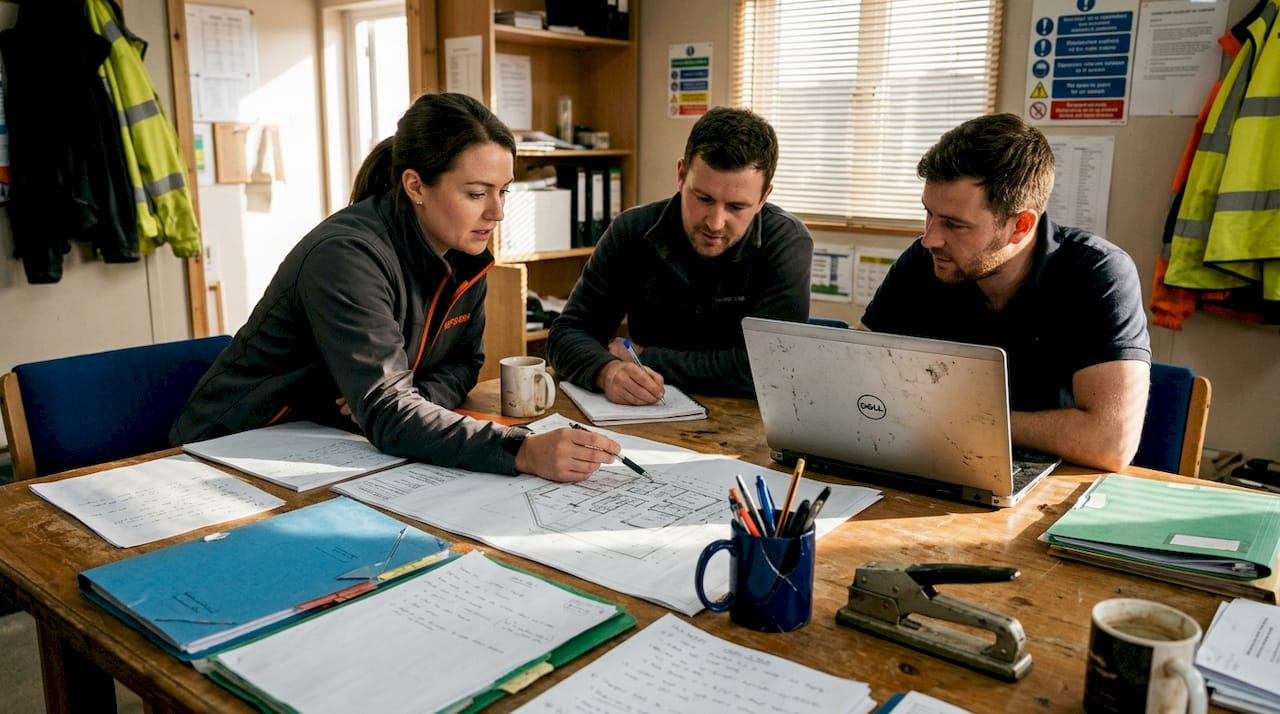
Project transparency improves dramatically when every team member, from the site supervisor to the client, can see the current status of documents and approvals. Accountability increases because there is a clear record of who issued what and when. Sensitive information, such as contract pricing or client data, can be restricted to authorised users only, reducing the risk of data breaches.
For UK construction managers, document control policy guidance from the National Archives reinforces that robust policies are not optional. They are a baseline expectation for any professionally run project.
Pro Tip: Assign a named document controller on every project, even if it is an existing team member taking on the role part-time. Clear ownership is the single fastest way to reduce document chaos on site.
Core components and key processes
Knowing the ‘why’ sets the stage for exploring ‘how’. The practical nuts and bolts of document control can be broken down into a clear set of components that every UK construction team should implement.
- Document numbering: Every document receives a unique reference code that identifies the project, discipline, and document type. This eliminates confusion when multiple drawings cover the same area.
- Version control: Each revision is labelled sequentially (Rev A, Rev B, and so on). Superseded versions are clearly marked and removed from active circulation.
- Access permissions: Not everyone needs access to every document. Role-based permissions protect sensitive information and reduce the risk of the wrong version being used.
- Distribution protocols: Formal transmittals record who received which documents and when, creating a legal audit trail.
- Review and approval workflows: Documents pass through defined stages before they are issued for construction, ensuring quality and accuracy.
Standardising communication and document handling is key to successful project coordination, particularly on multi-disciplinary projects where architects, engineers, and contractors all contribute documents simultaneously.
Here is a comparison of the three main approaches to document control:
| Approach | Version control | Audit trail | Accessibility | Cost |
|---|---|---|---|---|
| Manual (paper) | Difficult | Incomplete | Limited to office | Low upfront |
| Digital (basic) | Moderate | Partial | Remote access | Medium |
| Automated platform | Automatic | Complete | Full, real-time | Scalable |
For UK projects, document control policies recommend retaining project records for a minimum period after completion, which means your system must support long-term archiving as well as active project management.
Pro Tip: Set up a document register at the start of every project. A simple spreadsheet works initially, but a dedicated platform will save hours of manual updating as the project grows.
Choosing the right tools for document control
Once processes are clear, the next question is what tools will fit your workflow and scale as your projects do. The market offers a wide range of options, from basic cloud storage to purpose-built construction platforms. Choosing the wrong tool is a common and costly mistake.
Managing your construction documents effectively requires software that goes beyond simple file storage. The majority of builders now use digital software to streamline document sharing and reduce mistakes, which reflects a clear industry shift away from paper and email-based methods.
Key features to look for in any document control tool:
- Automatic version control that prevents old files from being accessed
- User access controls with role-based permissions
- Mobile compatibility so site teams can access documents on any device
- Audit trails that log every action taken on a document
- Integration with communication and task management tools
Here is a comparison of common tool types:
| Tool type | Best for | Weakness |
|---|---|---|
| Cloud storage (e.g. Dropbox) | Small teams, low volume | No version control or audit trail |
| Generic project management | Multi-industry teams | Not built for construction workflows |
| Construction-specific platform | Site teams, complex projects | Higher initial setup investment |
Potential pitfalls include hidden costs for additional users or storage, and poor adoption rates when tools are too complex for site teams to use daily. Understanding why digital construction collaboration fails often comes down to tools that were not designed with construction teams in mind.
When evaluating software for builders, prioritise ease of use above all else. A sophisticated platform that nobody uses is worse than a simple one that everyone adopts. Test any tool with your site team before committing, and ensure subcontractors can access it without additional cost.
Why document control is more human than technical
With plenty of technical advice covered, it is worth pausing to look at the people side of document control, because that is where most projects actually succeed or fail. We have seen teams invest in excellent platforms and still struggle, because the culture around information sharing had not changed.
The uncomfortable truth is that most document failures are human failures. A drawing gets used past its revision date because nobody told the site team to check for updates. A contract variation goes unsigned because the approval process was unclear. No software fixes a team that does not communicate.
What actually drives results is a combination of clear habits, ongoing training, and open dialogue about why document discipline matters. When site supervisors understand the direct link between version control and avoiding costly rework, they become advocates rather than reluctant users. Investing in workflow management culture pays greater dividends than any software upgrade alone.
The best construction teams treat document control as a shared responsibility, not a back-office function. That mindset shift is where the real gains are made.
Discover stress-free document control for your team
If you are ready to turn clarity into action, the right software can accelerate your team’s progress significantly. BRCKS was built specifically for construction teams who are tired of chasing documents through WhatsApp threads and email chains.
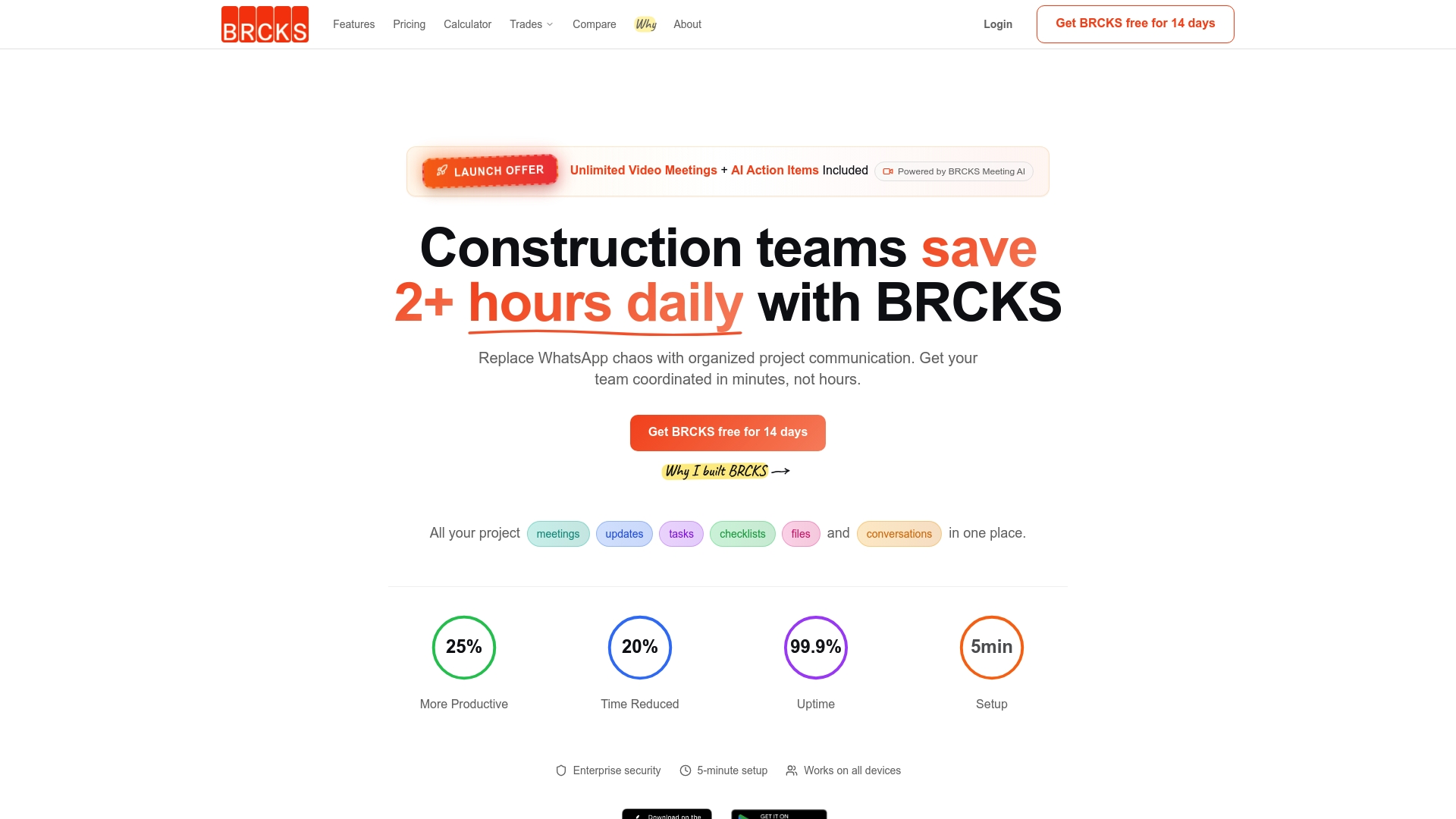
With BRCKS, your team gets structured document workflows, real-time file sharing, and a client portal that keeps everyone informed without the chaos. UK construction teams using BRCKS report saving over two hours daily by consolidating their tools into one platform. Whether you manage a small crew or a large multi-site operation, BRCKS software for builders scales with your needs. Explore construction communication software that replaces fragmented tools with a single, secure workspace. Get BRCKS free for 14 days and see the difference structured document control makes.
Frequently asked questions
What types of documents should be controlled on a construction project?
Every critical document including drawings, contracts, specifications, permits, and RFIs, contracts, and specs should be strictly controlled to avoid errors and costly delays.
How does document control improve site productivity?
Effective document control ensures that everyone works with the most current information, and up-to-date information reduces mistakes in UK projects by around 70%, sharply reducing expensive rework.
Is digital document control better than paper-based methods?
Digital systems provide superior version control, instant access, and audit trails, and the majority of builders now use digital software to manage documents, making them significantly more secure and efficient than manual paper systems.
What is the first step to improving document control?
Start by standardising naming conventions and implementing version control for all project documents, as standardising process is key for successful project coordination.
Recommended
- Construction Document Management: Solving the £21bn Problem | BRCKS
- Construction Software for Builders | BRCKS
- BRCKS | Construction Project Communication Software
- BRCKS | Construction Project Communication Software
How BRCKS Can Help
Effective document control is the backbone of any successful build, ensuring that every stakeholder is working from the most current information. By centralising your drawings, contracts, and compliance records, BRCKS removes the friction of manual tracking and reduces the risk of costly errors on site. Our platform is designed to give you total oversight and confidence throughout the project lifecycle, allowing your team to focus on delivery rather than paperwork. We invite you to discover how BRCKS can transform your administrative workflow by exploring our features today. Learn more at BRCKS and explore our full feature set.